


Ask about retinol at any dinner table and you will hear confident advice within a minute. It thins your skin. It only works if it stings. It is only for people over fifty. Retinol may be Europe's most talked about skincare ingredient, and it is almost certainly its most misunderstood. As the official European distributor of the A313 range, we see the same worries in our inbox every week, so it is time to take the most persistent myths apart, one by one.
Myth 1: Retinol thins your skin
This one probably survives because of the flaking some people notice in their first weeks. Light, temporary flaking is a familiar adjustment effect while skin gets used to vitamin A. It is not the product wearing your skin away. Used sensibly, vitamin A skincare is associated with the opposite impression: skin that looks smoother and more even over time. If flaking bothers you, use A313 less often for a while, keep the layer thin and follow with a good moisturiser. The adjustment phase passes; the habit is what stays valuable.
Myth 2: Stronger is always better
Skincare marketing loves percentages, and it is easy to believe that the highest number wins. In practice, the product that suits your skin and that you actually keep using does far more for how your skin looks than an aggressive formula you abandon after two irritated weeks. The A313 range is built on retinyl palmitate, a stable ester of vitamin A that converts step by step in the skin. Gentler by design, it suits the routine that matters most: the one you repeat, evening after evening, with a pea-sized amount for the whole face.
Myth 3: Results should show within days
Your skin renews itself on a cycle of roughly four weeks, and no cream rewrites that calendar. Judge any vitamin A product over weeks and months, not days. A practical trick: take a photo in the same light once a month instead of inspecting the mirror every morning. Gradual is normal. In fact, be cautious with any product that promises to transform your skin overnight; that promise says more about the marketing than the tube.
Myth 4: Retinol is only for mature skin
Vitamin A skincare is often framed as an emergency measure for later decades, yet people reach for it for very different reasons: the look of fine lines, uneven texture, dry patches or simply keeping an already comfortable skin feeling that way. There is no single right age to start, only the question of what your skin needs right now. What is true at every age: introduce it gradually, apply it in the evening and wear sunscreen during the day.
Myth 5: If it does not tingle, it is not working
Discomfort is not proof of effect. Persistent stinging, redness or tightness is your skin asking you to slow down, not a badge of honour to push through. A calm routine you can keep for years beats an intense one you dread. If your skin protests, pause for a few evenings, let it settle with gentle care and return at a slower rhythm.
Myth 6: All vitamin A products are the same
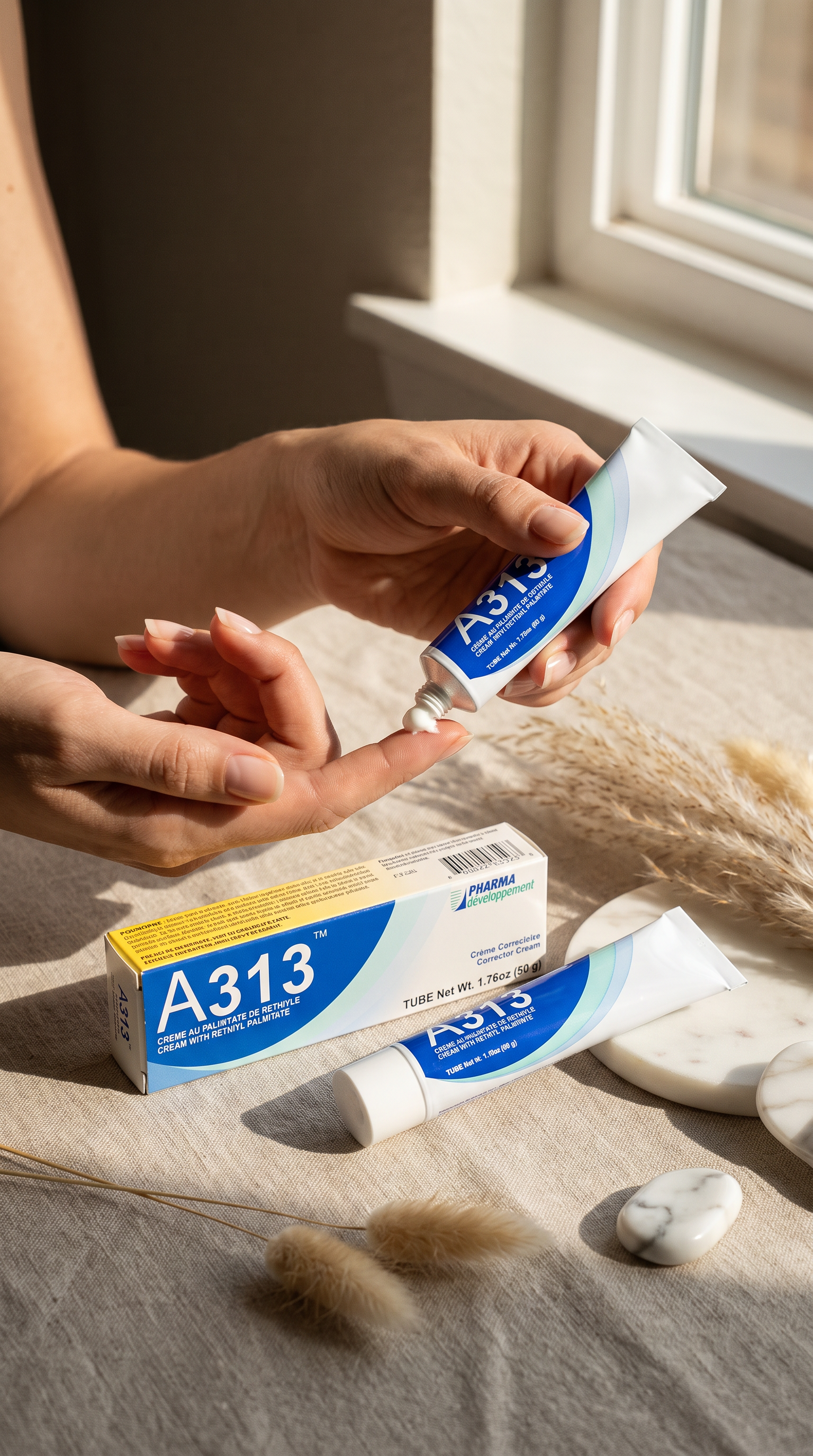
Vitamin A comes in several forms, from pure retinol to gentler esters such as retinyl palmitate, and they behave differently on the skin. The A313 name itself covers two genuine but different products. The original A313 is the Pommade 200,000 UI, a semi-transparent balm made in Corbigny, France, and sold mainly through French pharmacies. The modern A313 cosmetic range, which we distribute across Europe, is built around retinyl palmitate and includes the A313 Cream with Retinol and Vitamin A, an anti-wrinkle face cream, an eye contour serum and a lifting body milk. Neither is a copy of the other. Knowing which one you are buying is half the battle against confusion, and against counterfeits.
What remains when the myths are gone
Strip the folklore away and vitamin A skincare turns out to be pleasantly boring: a thin layer on clean, dry skin in the evening, a moisturiser to keep things comfortable, sunscreen in the morning and a little patience. If you are pregnant or breastfeeding, ask a skincare professional or pharmacist for advice before using vitamin A products. For everyone else, the best myth-proof strategy is simply a routine you enjoy keeping.
Ready to build yours on facts rather than folklore? Discover the A313 Cream with Retinol and Vitamin A.


